In the last decade, scientific studies on the use of Chinese herbal formulas for cancer treatment have proliferated. In this article, we will focus on the studies regarding their use in lung cancer.
Uses of Chinese Herbal Formulas in Lung Cancer Treatment
Antitumor Mechanisms: Many plants have properties that induce cellular apoptosis (cell death) in tumor cells, modulate inflammation, and improve the tumor microenvironment, hindering tumor growth.
Complement to Modern Therapies: The use of Chinese herbal formulas as a complementary therapy can enhance conventional treatments for lung cancer.
Some Chinese plants have been shown to have an antitumor effect in lung cancer, such as Fritillaria cirrhosa, due to its anti-inflammatory action and the reduction of tumor cell migration and invasion.
Antitumor Action of Dendrobium officinale in Lung Cancer
Dendrobium officinale, an orchid used in traditional Chinese medicine, has shown antitumor effects in scientific studies, particularly in non-small cell lung cancer.
Dendrobium officinale can exert its antitumor effect through several pathways:
Induction of apoptosis: Some active components of Dendrobium officinale can promote apoptosis (programmed cell death) in cancer cells, leading to tumor reduction.
Inhibition of angiogenesis: The extract could interfere with the formation of new blood vessels that supply nutrients to the tumor, thus limiting its growth.
Modulation of the tumor microenvironment: Dendrobium officinale can alter the environment around tumor cells, making it less favorable for their proliferation and survival.
Combined Use of Erlotinib and Chinese Herbal Formulas in Lung Cancer
Chinese herbal formulas have also shown promising results when combined with targeted therapies such as tyrosine kinase inhibitors (Erlotinib) in the treatment of lung cancer. These herbal formulas improve treatment efficacy, reduce adverse effects, and contribute to directly inhibiting the growth of tumor cells.
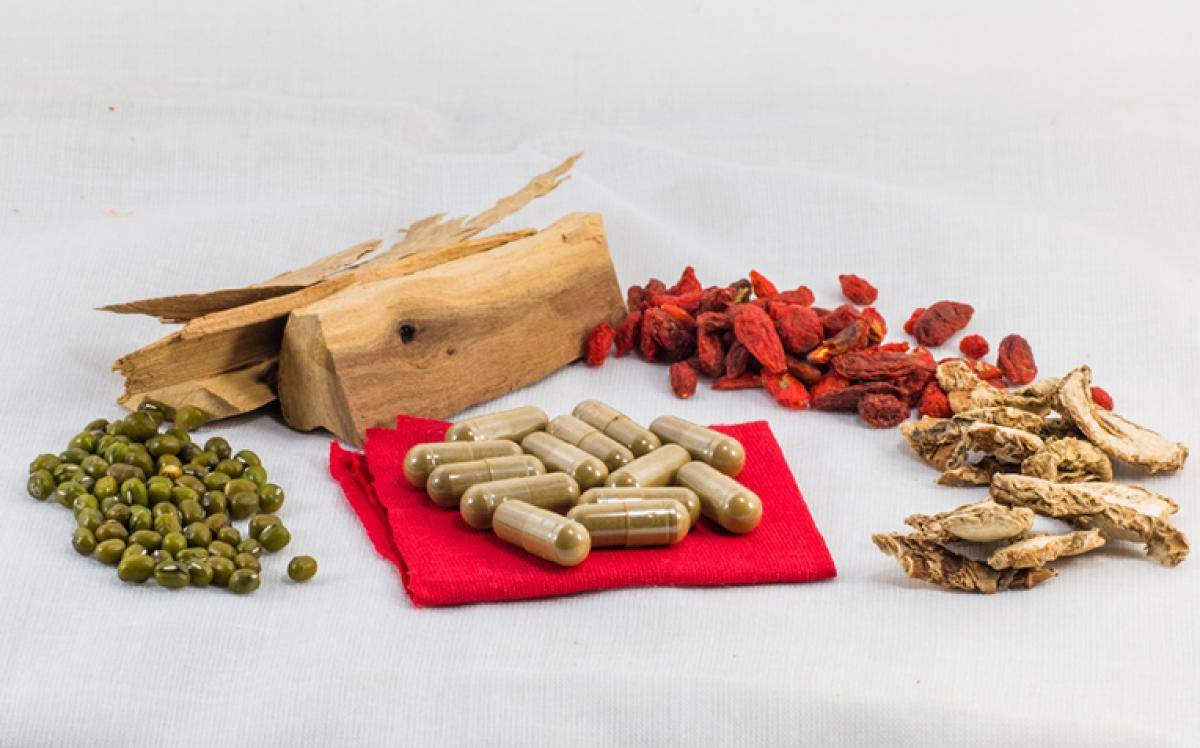
At our center, we prepare specific Chinese herbal formulas in capsules for lung cancer.
Traditional Chinese medicine has received significant recognition for its role in the treatment of lung cancer. Its benefits go beyond merely reducing adverse reactions and improving the success rate of chemotherapy. Traditional Chinese medicine also has the potential to regulate immune function, induce apoptosis (cell death) in tumor cells, reduce the risk of recurrence and metastasis, and ultimately prolong patient survival.
Combined Use of Chinese Herbal Formulas and High-Dose Intravenous Vitamin C
In our clinic in Barcelona, we combine specific Chinese herbal formulas for each type of cancer with the administration of high-dose intravenous vitamin C. The combination of both significantly improves the quality of life of our patients. Furthermore, we observe a greater decrease in tumor markers alongside a better response to chemotherapy and radiotherapy treatments. It is important to add that we must carefully control the administration days to ensure there is no interference with oncological treatments.
Scientific Studies on Chinese Herbal Formulas in Lung Cancer Treatment
- Li J, Zhang D et al. (2025) Baicalein induces apoptosis by inhibiting the glutamine-mTOR metabolic pathway in lung cancer. J Adv Res. 2025 Feb;68:341-357. doi: 10.1016/j.jare.2024.02.023. Epub 2024 Mar 2. PMID: 38432394; PMCID: PMC11785570.
- Rao Z, Wang Z et al (2025) Role of Traditional Chinese Medicine in Lung Cancer Management: A Review. Am J Chin Med. 2025;53(1):97-117. doi: 10.1142/S0192415X25500053. Epub 2025 Jan 29. PMID: 39880665.
- Xi Z, Dai R et al (2025). Traditional Chinese medicine in lung cancer treatment. Mol Cancer. 2025 Feb 26;24(1):57. doi: 10.1186/s12943-025-02245-6. PMID: 40001110; PMCID: PMC11863959.
- Liu K, Li Q et al (2024). Seven oral traditional Chinese medicine combined with chemotherapy for the treatment of non-small cell lung cancer: a network meta-analysis. Pharm Biol. 2024 Dec;62(1):404-422. doi: 10.1080/13880209.2024.2351940. Epub 2024 May 13. PMID: 38739082; PMCID: PMC11095295.
- Wei Z, Chen J et al. (2023). Traditional Chinese Medicine has great potential as candidate drugs for lung cancer: A review. J Ethnopharmacol. 2023 Jan 10;300:115748. doi: 10.1016/j.jep.2022.115748. Epub 2022 Sep 24. PMID: 36162545.
- Wang X, Hou L et al. (2023). The traditional Chinese medicine and non-small cell lung cancer: from a gut microbiome perspective. Front Cell Infect Microbiol. 2023 Apr 25;13:1151557. doi: 10.3389/fcimb.2023.1151557. PMID: 37180438; PMCID: PMC10167031.