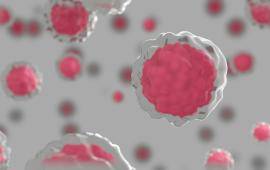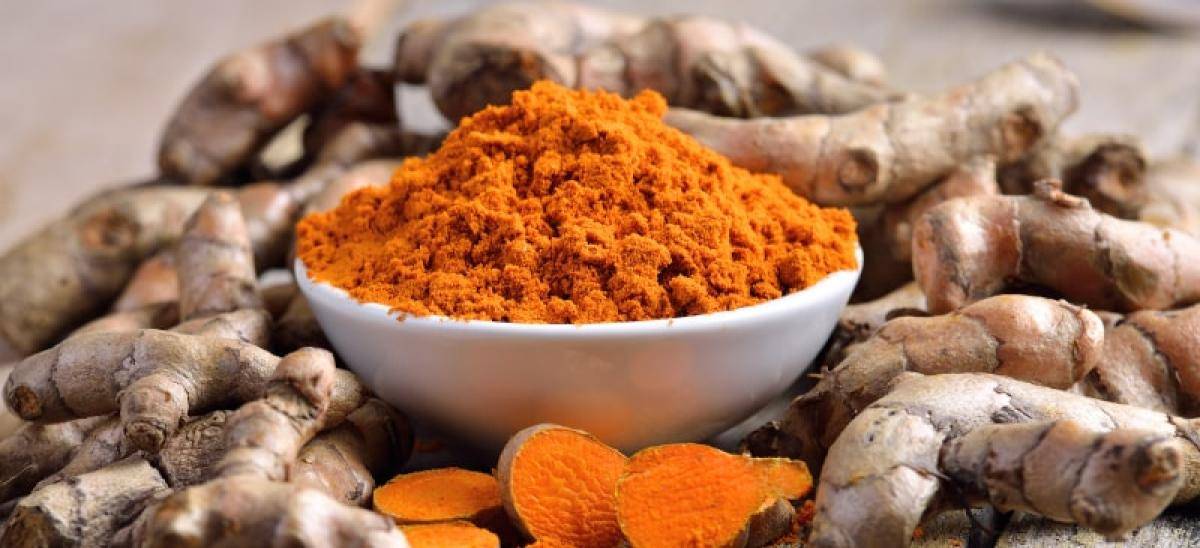
Turmeric has a yellow pigment called curcumin. Numerous studies have shown that curcumin exerts anticancer effects suppressing cell proliferation and inducing “apoptosis” which means physiological cell death.
The inhibition effect of curcumin on cancer growing is given to its ability to regulate protein kinase, the cell cycle, and transcription factors.
Curcumin also affects telomeres. Cancer cells have the ability to lengthen their telomeres. Curcumin has been shown to inhibit the ability to lengthen telomeres in human leukemia cells.
Curcumin has shown antitumor effects in breast cancer. HER2 positive. It can induce cell death in breast cancer cells by inducing changes in the cell membrane potential.
Cancer stem cells are one of the main causes of cancer recurrence after treatment. Cancer stem cells are responsible for resistance to chemotherapy after a period of treatment, therefore, research to develop approaches that allow the destruction of cancer stem cells is of much importance. Curcumin has shown its ability to kill cancer stem cells, in addition to increasing the effectiveness of chemotherapy in the treatment of breast cancer.
Curcumin may enhance the therapeutic effect of current breast cancer treatments, increasing the sensitivity of breast cancer cells to chemotherapy.
The p53 gene is a gene capable of detecting and repairing damaged DNA. It also has the ability to cause cell death thus preventing the development of cancer. The mutation of this gene increases the probability of developing cancer, since it results in the total or partial loss of its function. The p53 mutation is present in 30% of breast cancer. The importance of regulating this gene has led researchers to concentrate their efforts on developing an immunotherapy capable of regulating it.
Curcumin has shown its ability to induce cell death by activating and regulating the p53 gene. Cancer cells expressing high levels of the mutated p53 gene are the most sensitive to curcumin treatment.
Scientific studies on curcumin in the treatment of breast cancer
- Qi X, Zhang H, Wang S et al. (2026) Integrated network pharmacology reveal new key curcumin-binding targets in triple-negative breast cancer. Discov Oncol. 2026 Jun 12. doi: 10.1007/s12672-026-05413-2. Epub ahead of print. PMID: 42283977.
- Güler AE, Tuncer MC, Özdemir İ. (2026) Curcumin Enhances Gemcitabine Sensitivity in Breast Cancer Cells Through ROS-Associated Mitochondrial Apoptosis and Transcriptional Reprogramming. Biology (Basel). 2026 Mar 9;15(5):448. doi: 10.3390/biology15050448. PMID: 41823875; PMCID: PMC12984912.
- Hermansyah D et al. (2024). Curcuma longa extract inhibits migration by reducing MMP-9 and Rac-1 expression in highly metastatic breast cancer cells. Res Pharm Sci. 2024 Apr 1;19(2):157-166. doi: 10.4103/RPS.RPS_46_23. PMID: 39035580; PMCID: PMC11257204.
- Zhu J, Li Q, Wu Z, Xu Y, Jiang R. (2024) Curcumin for Treating Breast Cancer: A Review of Molecular Mechanisms, Combinations with Anticancer Drugs, and Nanosystems. Pharmaceutics. 2024 Jan 5;16(1):79. doi: 10.3390/pharmaceutics16010079. PMID: 38258090; PMCID: PMC10819793.
- Hermansyah D, Anggia Paramita D et al (2023). Combination Curcuma longa and Phyllanthus niruri Extract Potentiate Antiproliferative in Triple Negative Breast Cancer MDAMB-231 Cells. Asian Pac J Cancer Prev. 2023 May 1;24(5):1495-1505. doi: 10.31557/APJCP.2023.24.5.1495. PMID: 37247268; PMCID: PMC10495890.
- Zhao P, Qiu J, Pan C et al. (2023). Potential roles and molecular mechanisms of bioactive ingredients in Curcumae Rhizoma against breast cancer. Phytomedicine. 2023 Jun;114:154810. doi: 10.1016/j.phymed.2023.154810. Epub 2023 Apr 6. PMID: 37075623.
- Barcelos KA, Mendonça CR et al. (2022). Antitumor Properties of Curcumin in Breast Cancer Based on Preclinical Studies: A Systematic Review. Cancers (Basel). 2022 Apr 26;14(9):2165. doi: 10.3390/cancers14092165. PMID: 35565294; PMCID: PMC9099919.
- Song, X., Zhang, M. et al (2019). Molecular targets of curcumin in breast cancer (Review). Molecular Medicine Reports, 19, 23-29. doi.org/10.3892/mmr.2018.9665.
- Talib WH, Al-Hadid SA et al (2018). Role of curcumin in regulating p53 in breast cancer: an overview of the mechanism of action. Breast Cancer (Dove Med Press). doi: 10.2147/BCTT.S167812.
- Liu, Hui-Tien & Ho, Yuan-Soon. (2018). Anticancer effect of curcumin on breast cancer and stem cells. Food Science and Human Wellness. 7. 10.1016/j.fshw.2018.06.001.